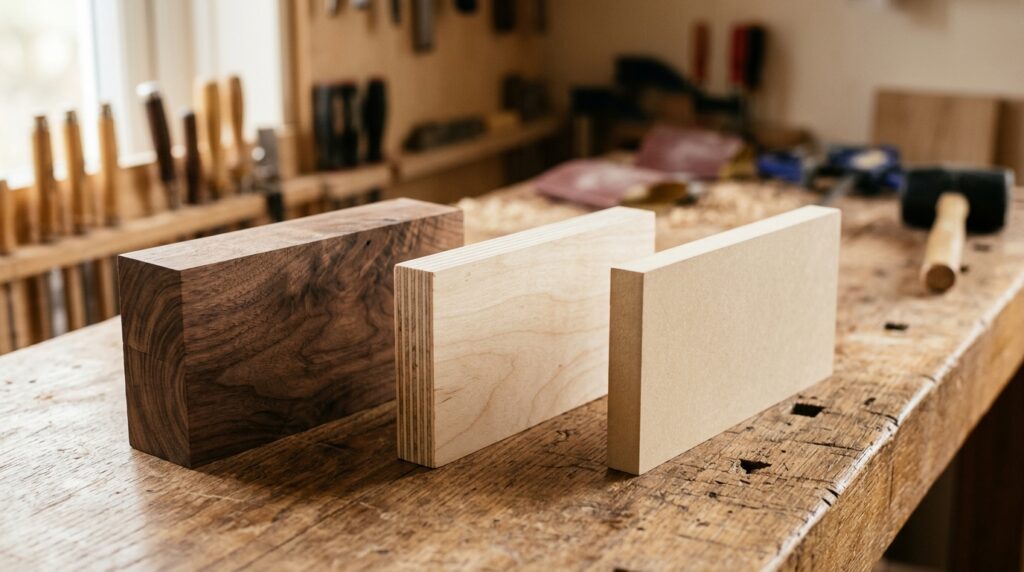
Walk into any furniture showroom in Singapore and you will be told everything is “solid” and everything is “premium.” The truth lives in the edges, the joints and the way a panel behaves after two rainy seasons. Here is how the three most common materials really compare — and where each one belongs in your home.
Solid wood: the real thing, and the responsibility that comes with it
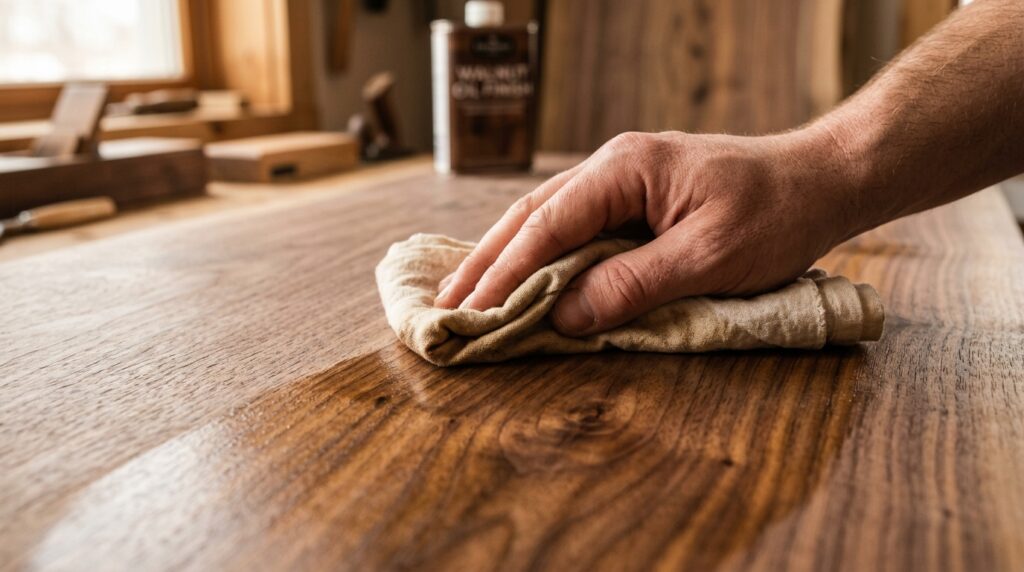
Solid wood is exactly what it sounds like: boards milled straight from the tree, with continuous grain running through the whole thickness. It is the most beautiful, the most repairable and the longest-living of the three. A solid oak or walnut piece can be sanded back and refinished decades from now, long after a laminated board would have been thrown out.
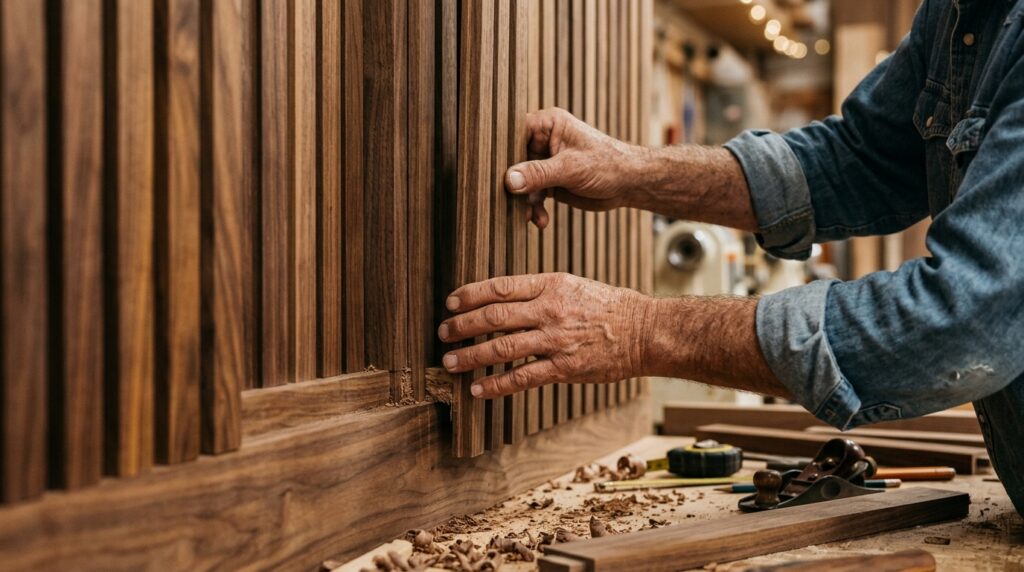
The trade-off is movement. Natural timber expands and contracts with humidity, and Singapore’s climate is unforgiving. That is not a reason to avoid solid wood — it is a reason to build it properly. We allow for movement in the joinery, seal end grain, and choose species that behave well in the tropics. Done right, solid wood is the material you hand to the next generation.
Plywood: the quiet workhorse
Good plywood is underrated. Because it is built from thin veneers glued in alternating directions, it stays flat and stable where solid wood might cup or twist. For tall wardrobe carcasses, kitchen boxes and anything structural, high-grade birch or marine plywood is often the smarter choice — not the cheaper compromise.
The catch is quality. Plywood ranges enormously, from dense, void-free birch to flimsy sheets with gaps hidden inside. You cannot see the difference on a showroom door, but you will feel it in five years. This is where a builder who buys honestly matters more than a brochure.
MDF: fine for the right job, wrong for the wet ones
MDF (medium-density fibreboard) is smooth, consistent and takes paint beautifully — which is why it is perfect for painted feature walls, moulding and detailing. It has no grain to fight you.
But MDF and water are enemies. Once moisture reaches an unsealed edge, it swells and never recovers. In a Singapore kitchen or bathroom, standard MDF is a false economy. We use it where it shines and keep it well away from where it fails.
So which should you choose?
- Statement furniture, dining tables, open shelving — solid wood, for warmth and longevity.
- Wardrobe and kitchen carcasses — premium plywood, for stability.
- Painted feature walls and fine detailing — MDF, for a flawless finish.
- Kitchens and vanities — moisture-resistant boards and sealed edges, never bare MDF.
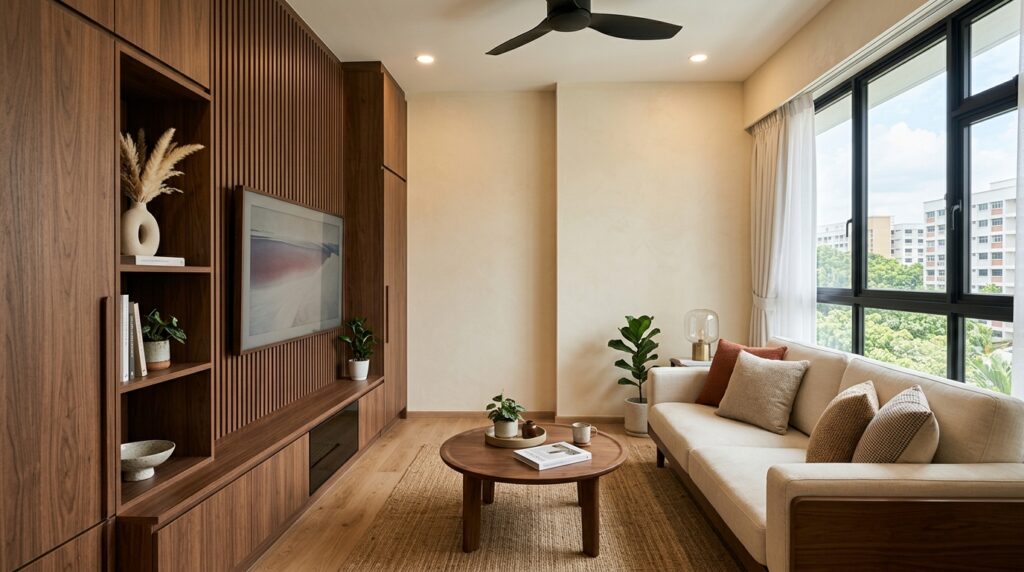
The honest answer is that a well-built home uses all three — each in the place it belongs. The skill is knowing which is which.
At Carpenova Studio we hand-select materials for every project and tell you plainly what we are using and why. No mystery boards, no “premium” labels hiding a cheaper core — just the right timber for the right job, built to last in a Singapore home.
Planning a piece and unsure what it should be made of? Get a free, no-obligation quote and we will walk you through the material choices for your space.